· 9 min read
Model Train Buildings That Light Up at Night
A tour of the model train buildings in Traluno's catalogue: what each category is for on a layout, which ones light up after dark, and what the paid ones cost.
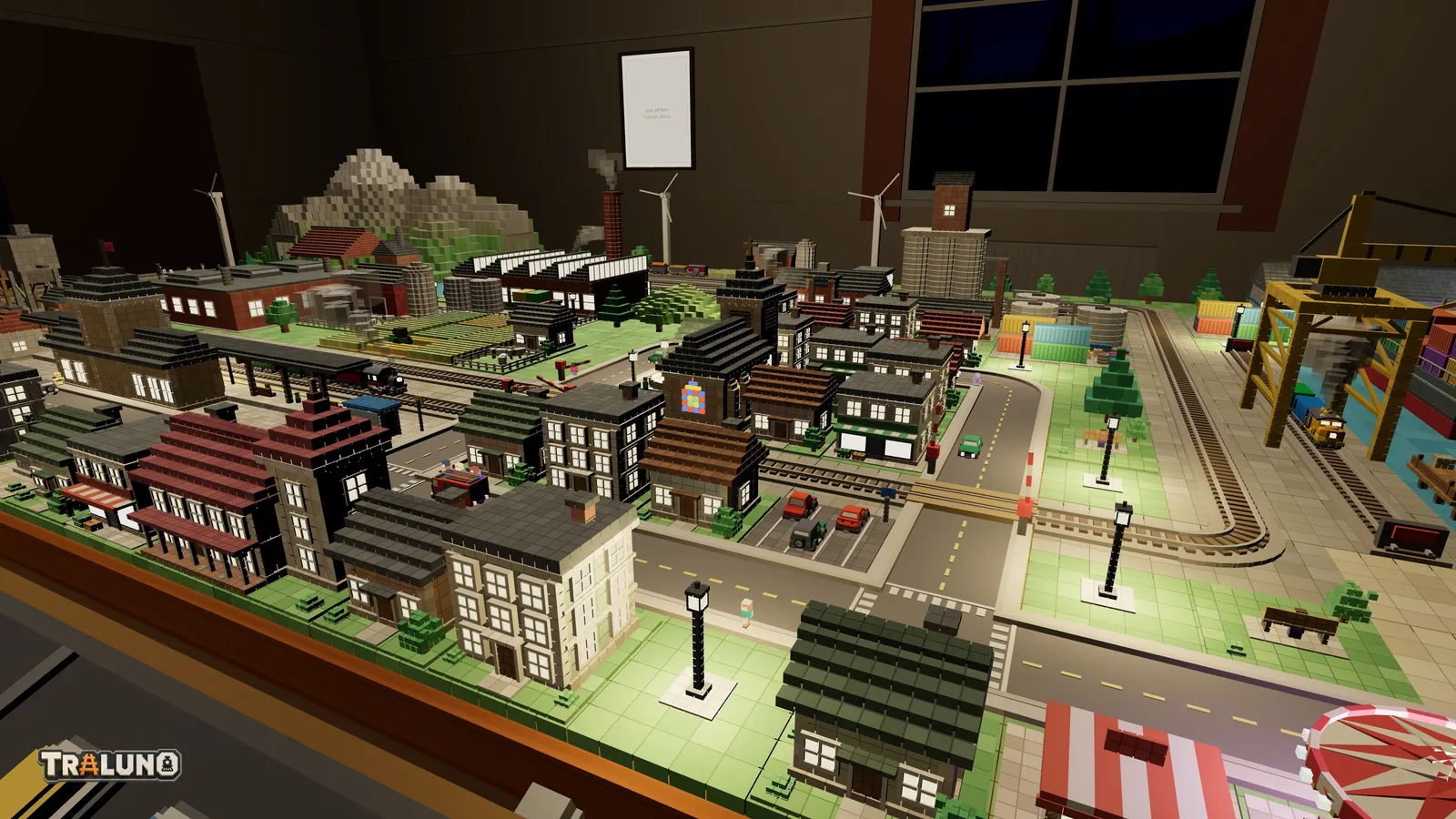
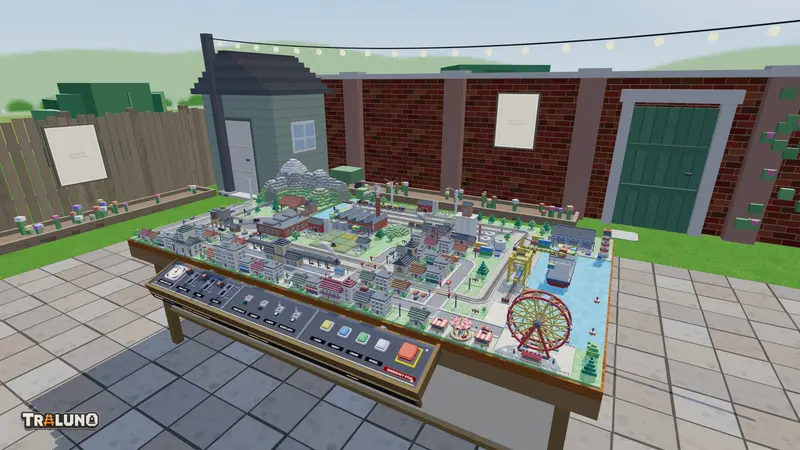
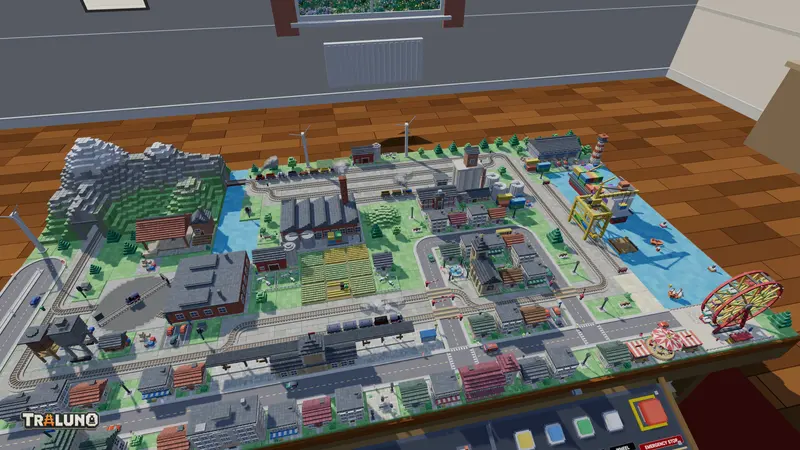
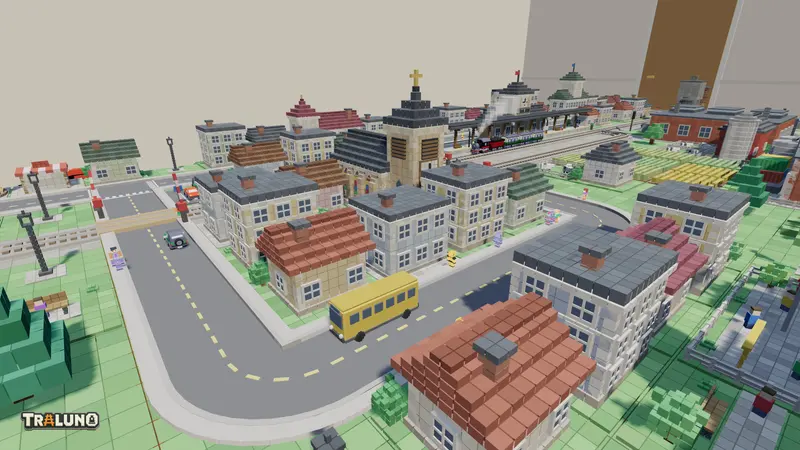
Model train buildings do two jobs. By day they say what a place is: a row of houses, a goods yard, a harbour front. After dark they decide where the light falls, and a building with no windows becomes a gap in the town. The sections below follow the labels the catalogue itself uses, and cover every building in it. How the night itself is made is covered in When the Lights Come On; this is the view from the front of the table.
Prices are in US dollars, include VAT and are paid once. Anything without a price is free.
Model train lighting, switched from the desk
Night is run from the control desk on the front of the table. The CLOCK lever sets how fast the day passes, and the NIGHT button jumps to evening, or back to morning. Two switches matter here. LAMPS turns the windows, the street lamps and the vehicle lights on and off together, and ROOM LIGHT does the same for the room's own lamp. Two things ignore LAMPS: the lighthouse beam and the carousel's ring of bulbs, which run on their own.
By day a window is near-black glass, and the warm pane only appears after dusk. That is why some glazing in the catalogue, the Bus Stop's shelter for one, is drawn as pale panels instead: a pane that only lights at night would make a shelter a dark box all day.
A handful of models also put real light on the ground around them rather than just glowing: the Street Lamp, the Station, the Fountain Square, the Zebra Crossing, the Carousel, the Ferris Wheel and the Lighthouse. The engine gives that real light to the first sixteen of them on a layout, in the order they were placed. Any after that still glow, but light nothing around them.
Houses
Cottage, Townhouse, Farmhouse and Tool Shed are free. The Cottage takes its wall and roof colours from the cell it stands on and the Townhouse its wall colour, so a street of them does not repeat; the Farmhouse is the Cottage painted white. At night the Cottage shows windows on all four sides, the Townhouse three storeys of them, and the Tool Shed a single window beside its door.
Victorian Villa ($1.99) is two cells wide, with a tower and a veranda, and lights two floors of windows front and back plus three up each of two faces of the tower. Apartment Block ($1.99) is two cells of four storeys with windows on every side.
Family Home and Bungalow are free as well. The Family Home is a detached two-storey house on two cells by two, with a garage or a carport and gardens front and back; the Bungalow is single-storey, wide and low. Like the Cottage, both take their colours and details from the cell they stand on, and both light their windows after dark. Villa with Pool ($2.99) is a modern villa on three cells by two, with big windows that glow at night and a swimming pool lit from underwater.
Houses also put people on the streets. Most buildings carry a population figure, and the layout sends out roughly one pedestrian for every ten, up to forty-four. The Apartment Block counts for twenty-four, a Cottage for four.
Town
Corner Shop (free) has two big shopfront panes that glow a paler, whiter light than the house windows, under a striped awning whose colour depends on the cell. Station (free) is seven cells long: a platform under a canopy, a booking hall with a clock tower and a TRALUNO name board, and four lamps on posts along the platform. It is also one of the models that lights the ground around it. The Bus Stop and Parking Lot (free) stay dark.
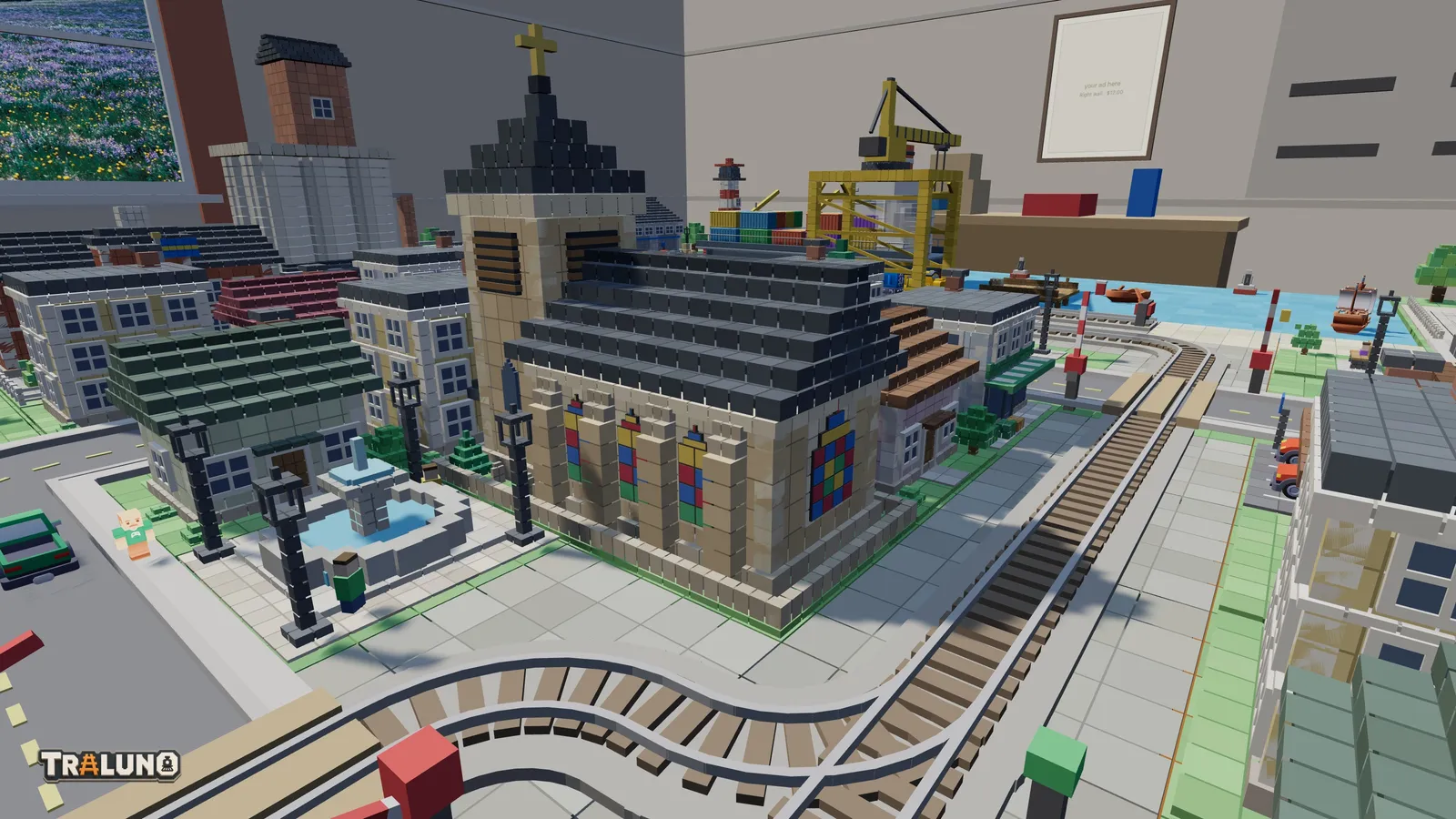
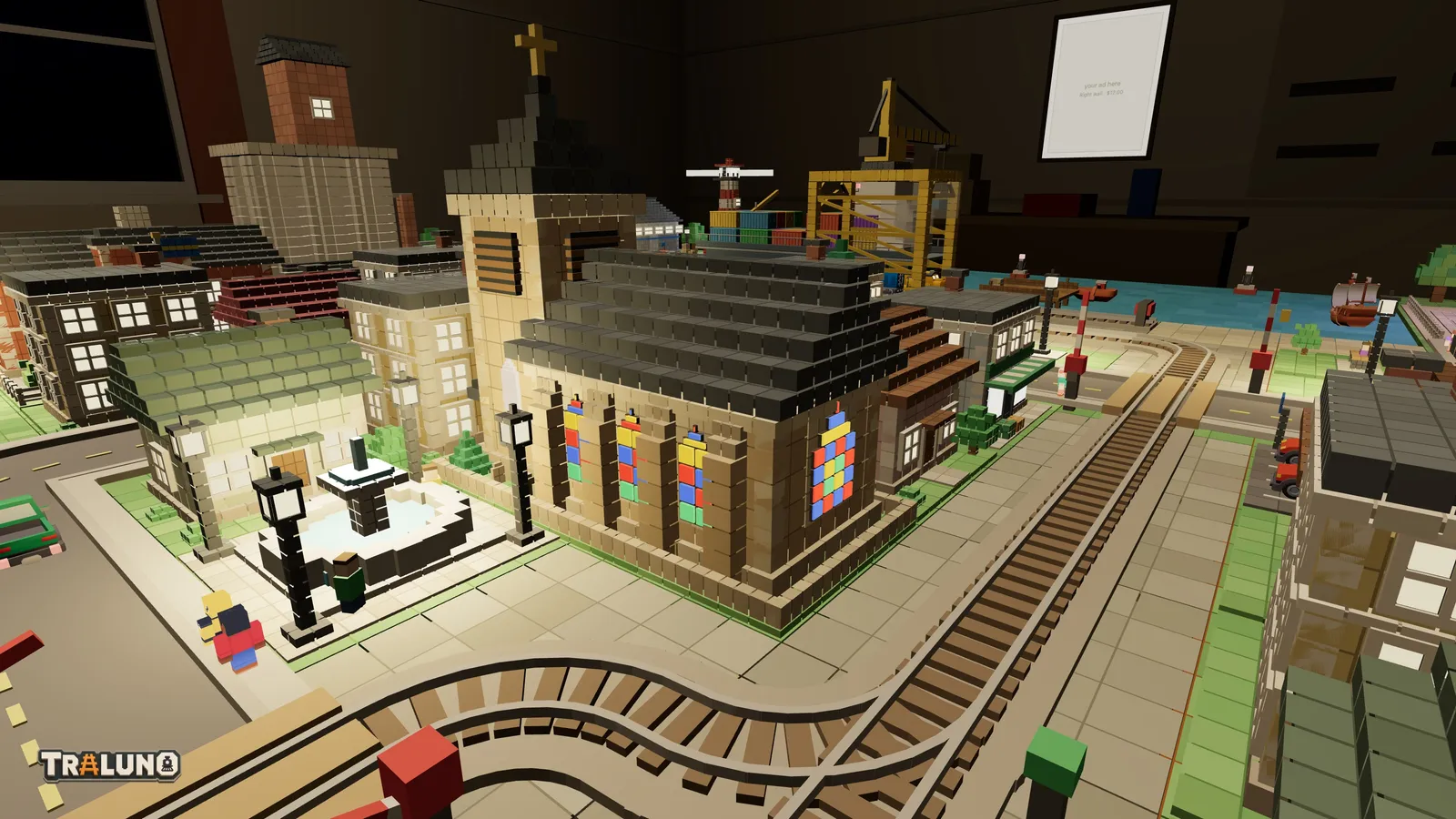
Town Church ($1.99) has stained glass: tall lancets down both sides of the nave and a larger east window, each leaded into small panes of ruby, cobalt, gold and green. By day the colours show in the glass; after dark every pane glows in its own colour, and a lamp lights the porch. School ($2.99) is two cells by two, red brick with two floors of paired windows, a playground and a flag above the roof; it counts for thirty people, more than any building but the two towers. Town Hall ($2.99) has a portico, a clock tower, two floors of windows and a street lamp either side of its steps.
Office Tower ($3.99) and Residential Tower ($2.99) are the tallest buildings in the catalogue, each on two cells by two. After dark the office floors light in a pattern that depends on the cell, so never all at once, and a red warning light flashes on the mast. The residential tower lights about half of its flats, its stairwell and the downlights over its entrance.
Industry
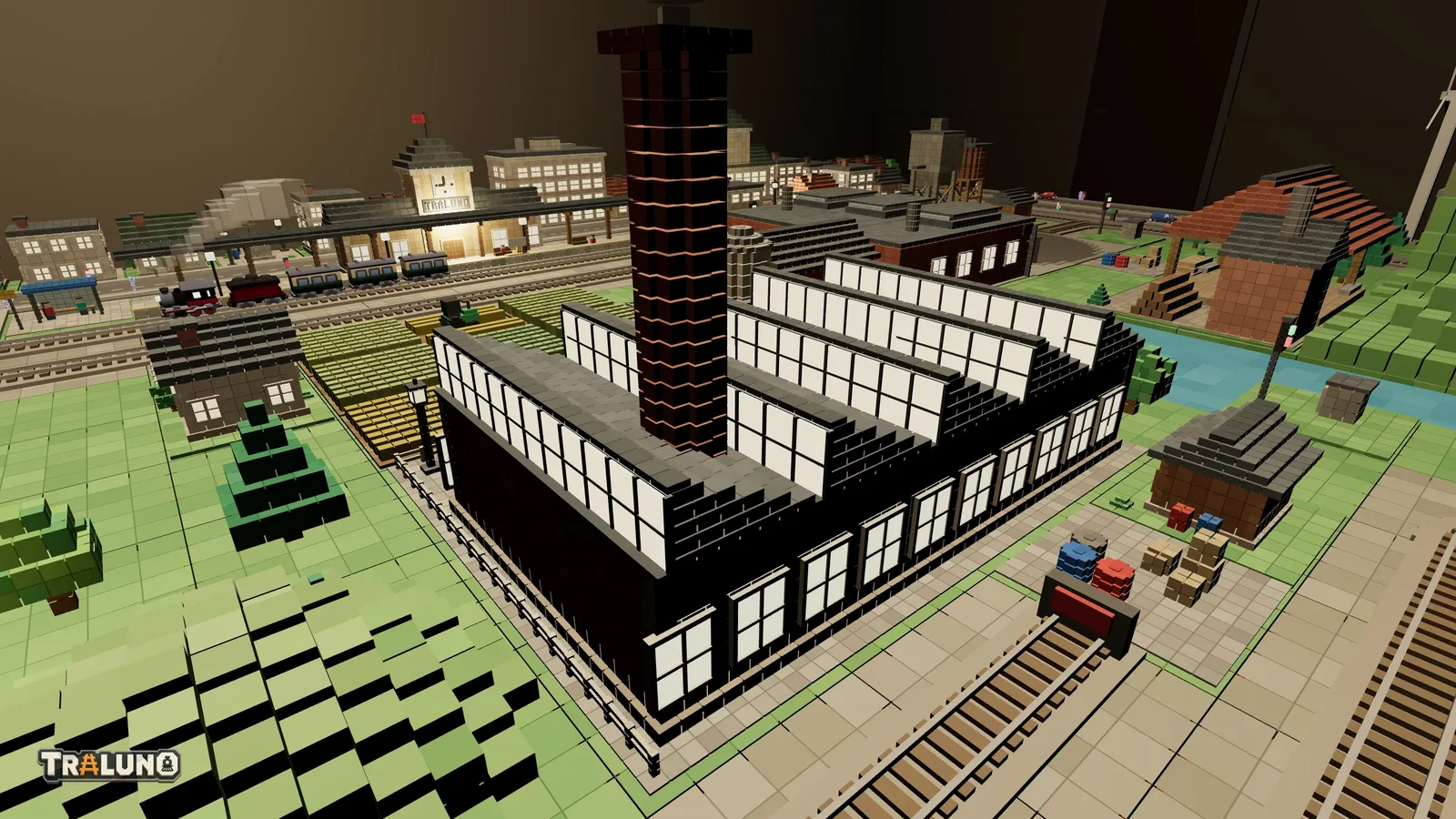
Brick Factory ($3.99) is the largest building at four cells by three: a sawtooth roof whose glazed north-light faces glow after dark, a chimney that smokes day and night, a loading dock, a row of ten tall windows down each long side, and a lamp at each front corner of the yard. Grain Elevator ($2.99) is six silos under a head house; at night one window glows high in the head house and four more along the shed at its foot. Sawmill ($2.99) has a log carriage that feeds its log slowly past a spinning toothed disc blade and runs back quickly, and one lit window in its office. Goods Warehouse (free) has a band of high windows along both long sides and a lamp at each end.
Oil Tank, Container Stack and Crates & Barrels (free) have no windows and stay dark. That is useful rather than a gap in the range: a yard of unlit tanks between lit buildings gives the night picture some contrast.
Railway
Roundhouse ($3.99) is a three-stall engine shed with a steam engine and a blue diesel parked in two of the stalls, windows down both sides and along the back, and a lamp at each corner of the door end. Turntable ($3.99) turns its bridge and runs its own small engine out along its approach roads and back; after dark the engine's headlamp and cab windows light. Both are covered properly in the turntable post.
Yard Office (free) is a signal box on steel legs, glazed on all four sides so the signalman can see the whole yard, which after dark makes it a lantern over the sidings. Signal Mast (free) has red and green lamps that light at night. The Water Tower and Coaling Tower (free) are unlit.
Harbor
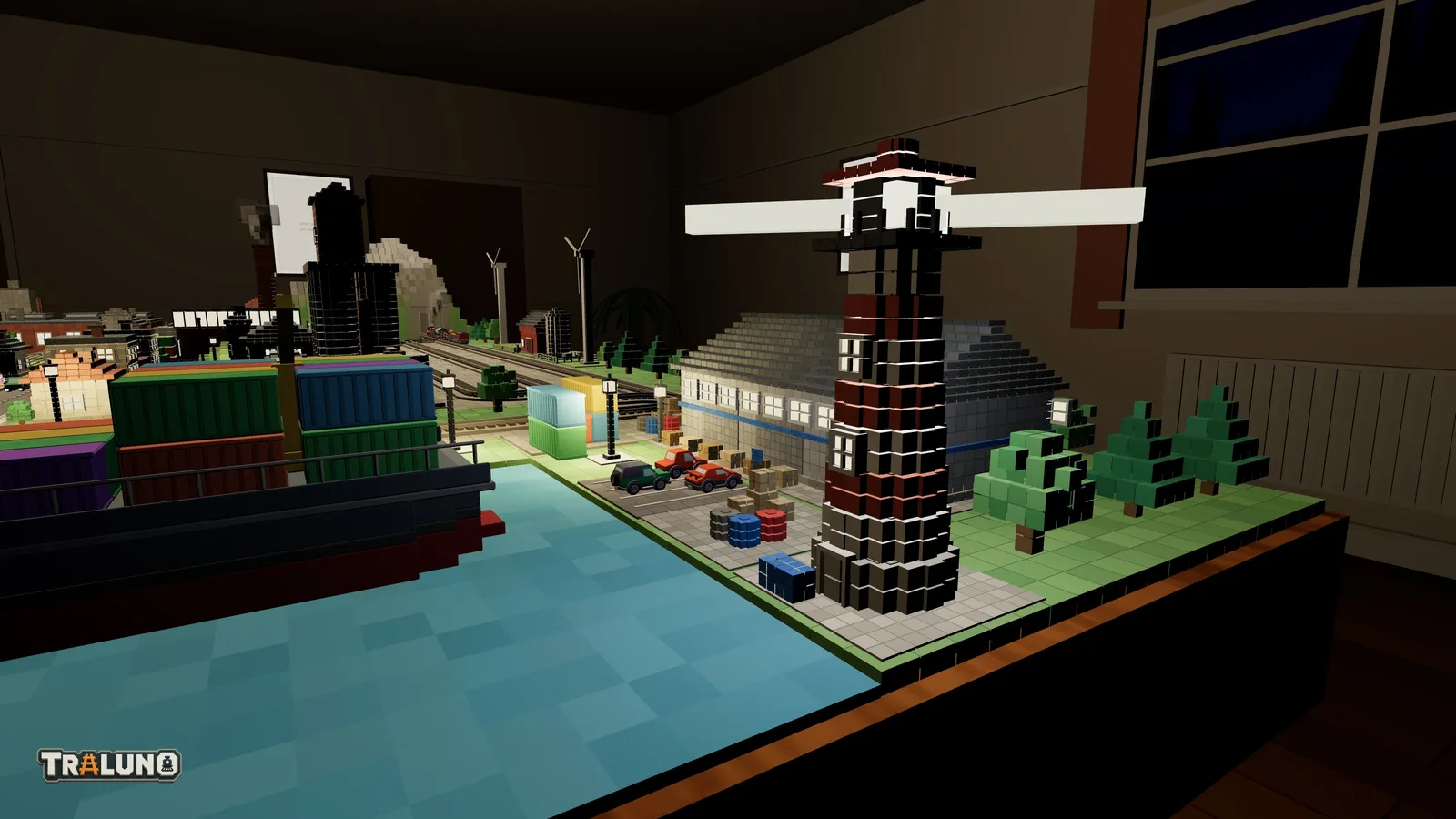
Lighthouse ($1.99) is the one building with a moving light. Once it is dark enough, a two-armed beam turns from the lantern at the top, and the lantern glazing and the tower's two small windows light as well. Cargo Ship ($3.99) is three cells by four and stands on water. Its superstructure has three decks of windows and a glazed wheelhouse, lit a cooler blue-white than the town, and it carries navigation lights: red to port, green to starboard and white at the masthead. Its radar turns on a short mast above the bridge. The Buoy (free) has a red lamp on top.
Harbor Crane ($2.99) straddles the quay track. Press CRANE on the desk and it lifts a container off the water side, carries it over the track and sets it down on the land side; the next press takes it back. It has no lights, and neither do the Fishing Boat, Sailboat or Wooden Pier (all free).
Farm
The farm is mostly dark at night. Barn & Silo (free) has three small windows and the Windmill ($1.99) two up its tower; the Wind Turbine ($1.49), the fields and the pasture are unlit. The sails, the rotor and the tractor keep working through the night regardless.
Fair
Fair Booth (free) lights its counter window. Carousel ($2.99) has a ring of twenty-four bulbs in four colours round the edge of its canopy, turning with it: muted beads by day, a lit ring after dark. Ferris Wheel ($4.99) has strings of bulbs up all four of its raking legs, twenty-eight in all, and a lit ticket booth. The wheel itself wears plain bulb caps that do not light, for a reason the engineering post explains; the ride's own light picks them out instead. Both rides start and stop on the WHEEL button, and both can be ridden from a seat.
Street
Street Lamp is the basic unit of a lit town: a glowing lantern on a post that also throws real light on the paving around it. Fountain Square has a lamp at each corner and Statue Square two. Zebra Crossing has an amber beacon on a striped pole at each side of the road, glowing after dark. Park Bench, Little Park and Fence stay dark. Everything in the category is free.
What moves through it
Locomotives carry headlights: one on the steam engines, two on the diesels and the electric, one on the yard switchers, with a red tail lamp on the diesels and the switchers. The steam engines, diesels and switchers also light their cab windows. The Silver Streamliner ($4.99) goes further: its electric and all three railcars have lit windows down their length, which makes it the one passenger train that reads as a row of light at night.
On the roads, cars and vans run with headlights and red tail lights, and the Bus ($1.49) lights its long row of windows and its destination board. The Fire Truck and Police Car ($1.49 each) flash their light bars, blue on the fire truck and blue and red on the police car, by day as well as at night. All of these are lit shapes rather than beams, so a car does not throw light on the road ahead of it.
Placing model train buildings for the night
Three habits follow from the list above.
Leave dark gaps. A layout where every cell glows reads as one bright smear. Unlit industry, fields and water between lit streets give the windows something to stand out against.
Place the important lamps early. Only the first sixteen light-casting models get real light, so if one particular lamp or the lighthouse matters to the picture, put it down before the rest.
Give the dark a landmark. One moving light, the lighthouse beam or the fair, does for the night picture what a mountain does by day. The scenery ideas post has more on composing a table, and the room around it changes after dark too, with stars in only one of the four: see the rooms post. Then open the layout and press NIGHT.
- buildings
- lighting
- night
- catalogue