· 10 min read
Model Train Track Plans for One Table
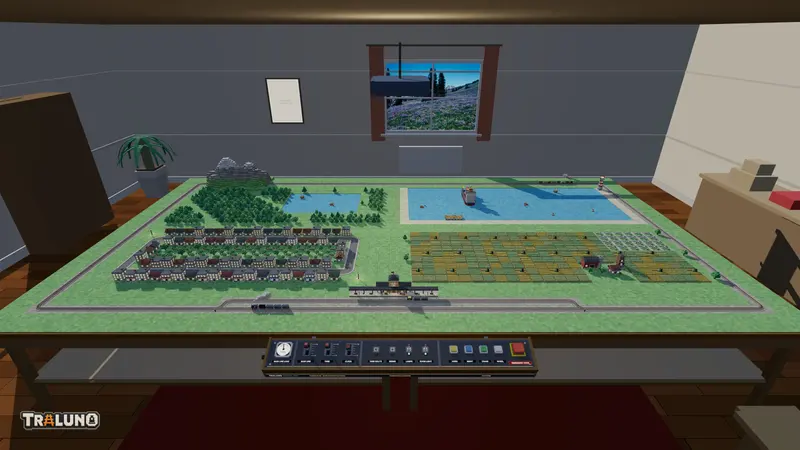
Six model train track plans drawn cell by cell on one 3 m by 1.6 m table: oval, passing loop, figure eight, yard, out-and-back and dogbone.
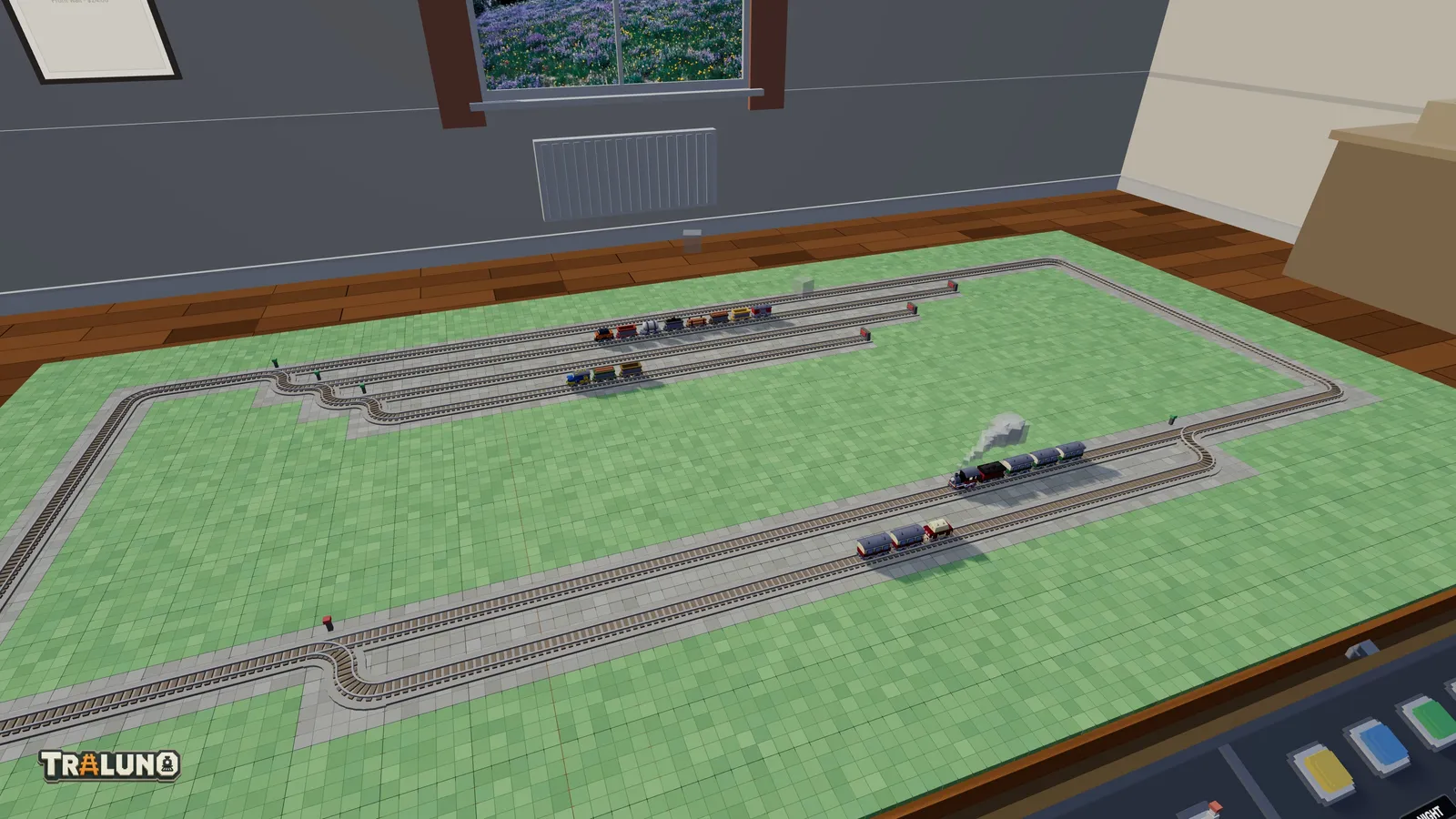
Model train track plans come in thousands of variations, and nearly all of them are built from the same half-dozen shapes. Here are six of those shapes drawn for Traluno's table, which is 30 cells wide and 16 deep. Each is drawn on the real grid, every piece in it meets its neighbours, and each uses only the six track pieces in the catalogue. Each also teaches something the one before it does not.
The grid and the pieces
A cell is 10 cm and the table is 30 cells by 16, which is the 3 m by 1.6 m table every layout starts on. Track snaps to cells, so a plan is a list of which piece goes in which cell, facing which way. All six track pieces are free.
Straight. One cell of track. In Track mode, dragging a straight paints a run of them, so the long sides of a plan take seconds.
Curve. A quarter turn inside one cell, and there is only one. Two side by side make a U-turn, and an oval needs exactly four. Why tight curves break voxel track explains why there is a single radius.
Switch (left) and Switch (right). A straight with a branch that turns a quarter circle inside the same cell and leaves through its side. Put a curve in the next cell and the branch straightens into a second track alongside the first, one cell over. That pairing, switch then curve, is how every passing loop and siding below is built.
Crossing. Two straight tracks crossing at right angles. A train goes straight over and cannot turn from one to the other.
Buffer stop. A straight with a buffer at one end, for the end of a siding.
Three rules of the simulation shape these plans as much as the pieces do. A train that reaches the end of the line, at a buffer stop or at a piece with nothing after it, stops and reverses. A train coming into a switch from either of its two legs always goes through, whichever way the switch is set; only a train arriving at the single end follows the setting. And a train that finds another in its way stops, and if the way is still blocked after about eight seconds, it reverses.
In the drawings each character is one cell, and the bottom edge is the front of the table, where the control desk is and where you stand. - and | are straights, / and \ are curves, * is a switch, + the crossing, [ and ] buffer stops, and . is empty table. The drawings come out stretched upwards: the real table is nearly twice as wide as it is deep.
1. The plain oval
..............................
..............................
../------------------------\..
..|........................|..
..|........................|..
..|........................|..
..|........................|..
..|........................|..
..|........................|..
..|........................|..
..|........................|..
..\------------------------/..
..............................
..............................
..............................
..............................
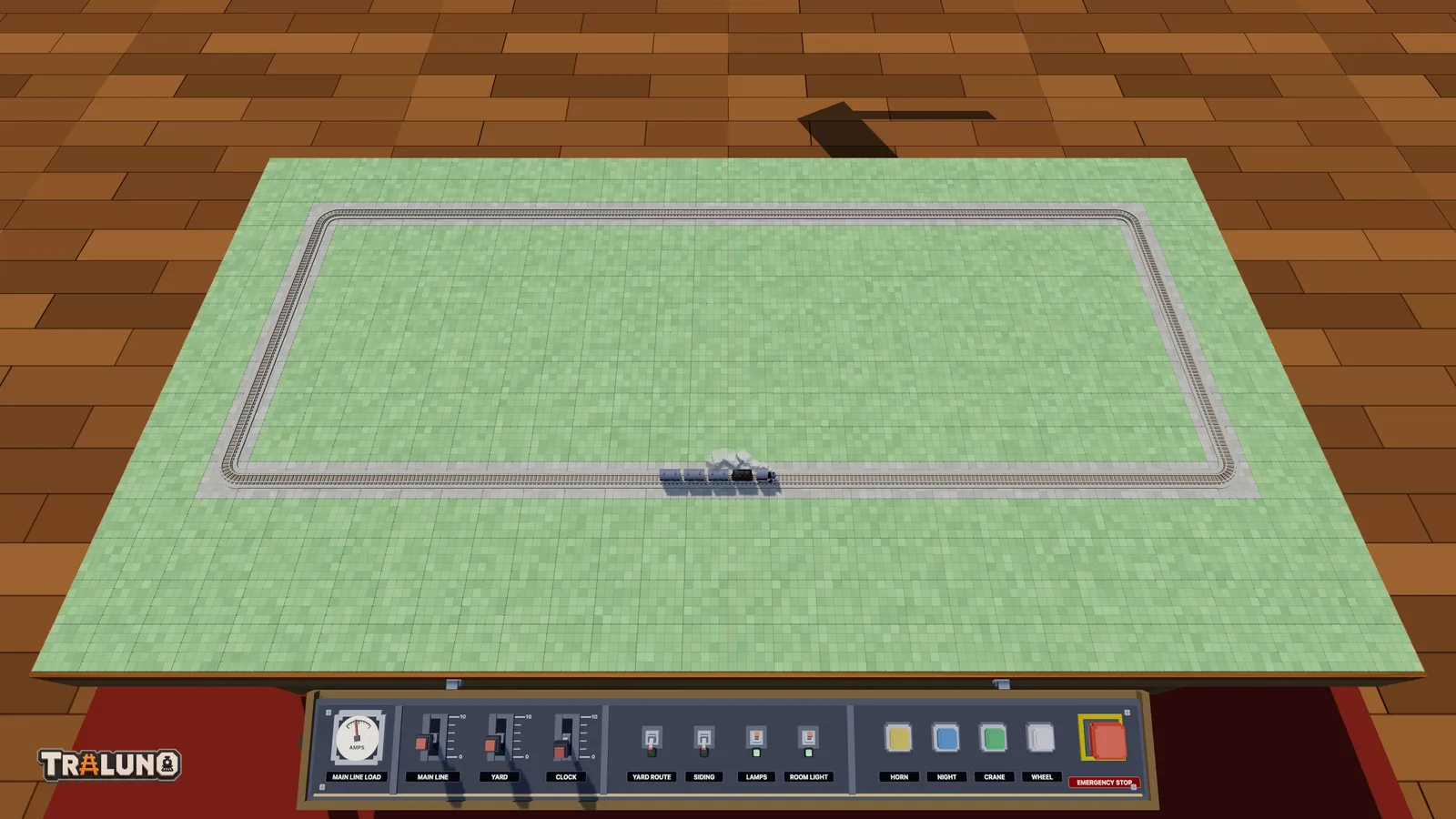
68 pieces: 64 straights and 4 curves.
The shape every layout starts from, and the one lay your first loop walks through. It sits two cells in from the back and sides and leaves the front four rows empty, which is the strip you will want for a road, a station or a row of houses. Lay the four curves first and fill in the straights after.
It teaches the basics: rotation, joins, a train going round. One train runs on it forever. Put a second one on facing the other way (press R before placing a train to turn it round) and they meet: each stops, waits, and after about eight seconds reverses, so the pair shuttle back and forth between meeting points. That is the problem the next plan solves.
2. An oval with a passing loop
..............................
..............................
../------------------------\..
..|........................|..
..|........................|..
..|........................|..
..|........................|..
..|........................|..
..|........................|..
..|........................|..
..|........................|..
..\----*--------------*----/..
.......\--------------/.......
..............................
..............................
..............................
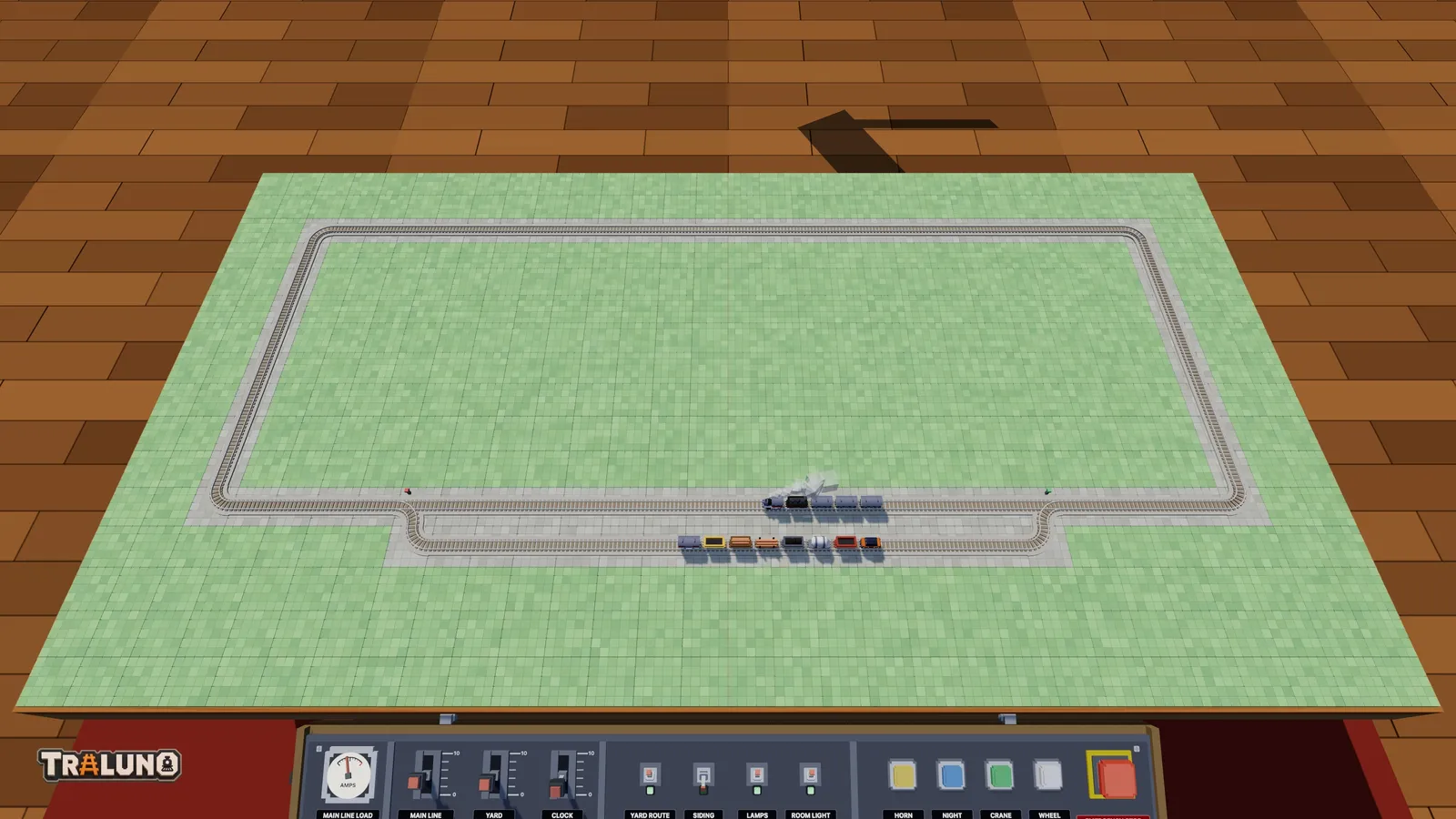
84 pieces: 76 straights, 6 curves and 2 switches.
The oval again, with a second track along the front for fourteen cells: the smallest plan with something to operate. Lay the oval first, then drop the two switches onto the front straight; placing a track piece on top of another replaces it.
The left switch faces trains running to the right along the front, and the right switch faces trains running to the left. Set the left one to Branch and the right one to Straight, and every train heading right takes the loop while every train heading left stays on the main line. If two trains reach the loop together, they pass. If they meet anywhere else, they stop and turn back, and you find out how much timing matters on single track.
The control that fixes the timing is Stop in the Trains window, which holds one train in the loop until the other is through. Controlling trains and switches covers that window and the Switches window in detail.
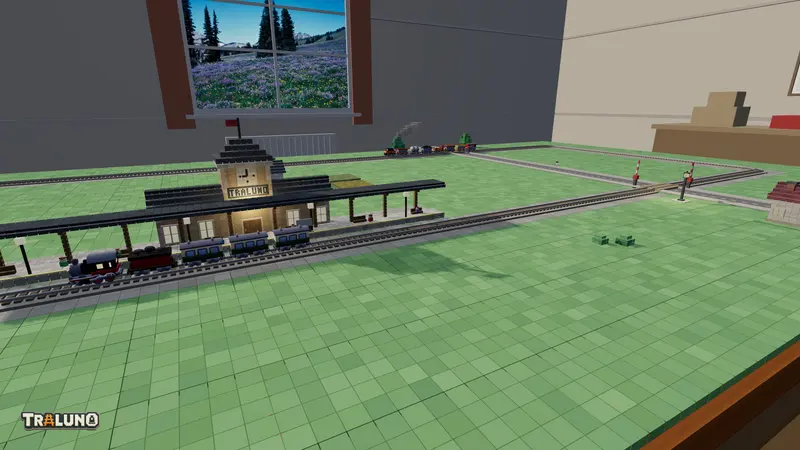
The loop is long enough for anything in the catalogue: the longest trains, the Mixed Freight and the Heavy Coal Drag, take about five cells. The Station is seven cells long and one deep, so it fits in front of the loop with room to spare.
3. A figure eight through the crossing
..............................
.............../-----------\..
...............|...........|..
...............|...........|..
...............|...........|..
...............|...........|..
...............|...........|..
../------------+-----------/..
..|............|..............
..|............|..............
..|............|..............
..|............|..............
..|............|..............
..\------------/..............
..............................
..............................
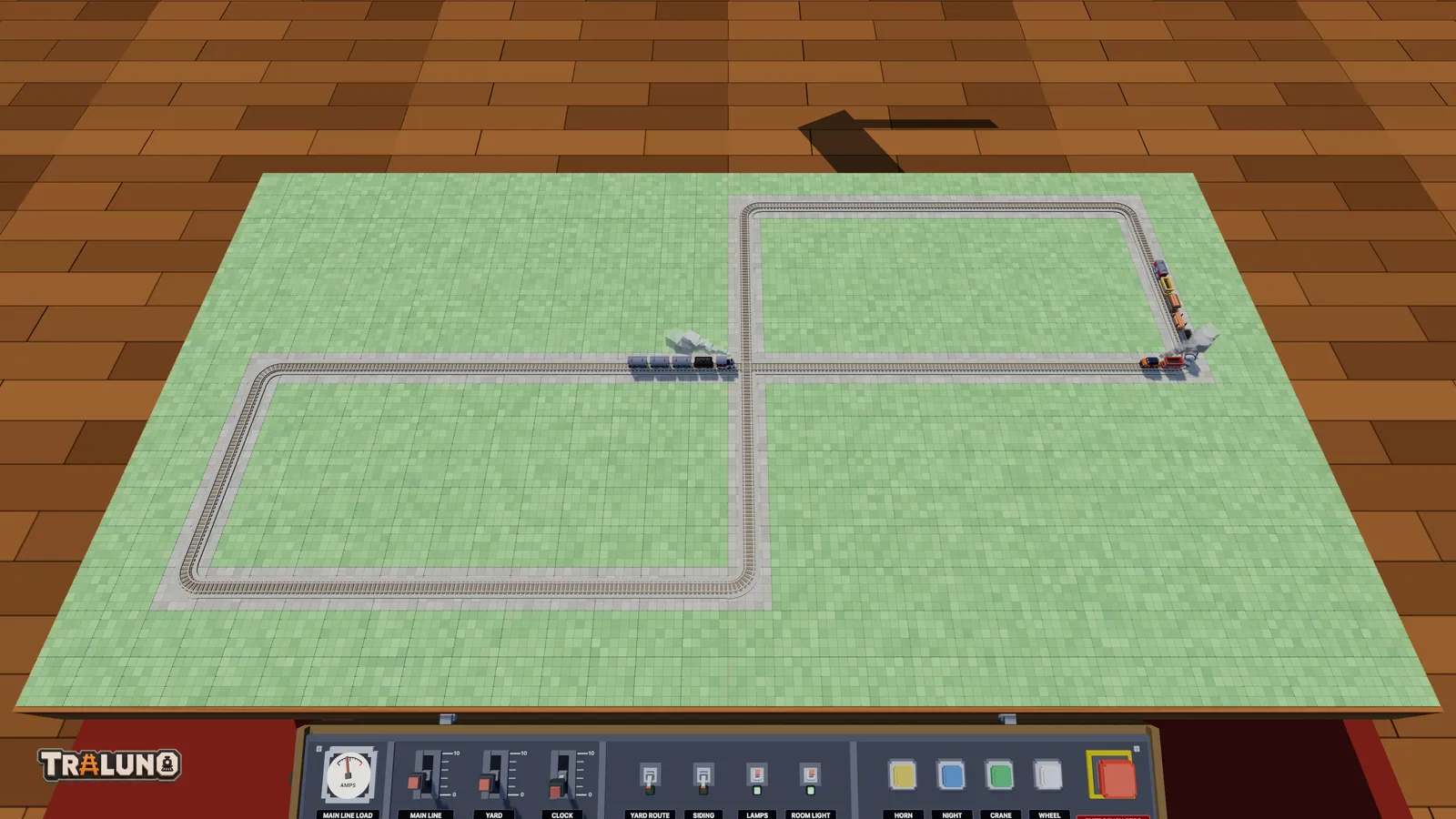
73 pieces: 66 straights, 6 curves and 1 crossing.
The crossing is square and every curve is a quarter turn, so a figure eight cannot have its two loops side by side. Each loop has to join the crossing's exit on one track to its entrance on the other, and those are at right angles, so the loops end up corner to corner: back right and front left. Follow the train and it turns right three times in one loop and left three times in the other, which an oval never asks of it.
There are no switches, so there is nothing to operate. This is a plan for watching, and with two trains on it the crossing is the one place their paths meet.
The empty corners do some of the scenery planning. The back left is 15 cells by 7, room for the Mountain with Tunnels ($4.99), which is 8 by 5 and turns any track under it into a tunnel; what the table teaches explains why mountains belong at the back. The front right is the obvious place for a town.
A real figure eight can cross on the level like this, or carry one track over the other on a bridge. Traluno's track is all at one height, so here it is always the crossing.
4. An oval with a yard
..............................
..............................
../--*---------------------\..
..|..\*---------------]....|..
..|...\*------------]......|..
..|....\----------]........|..
..|........................|..
..|........................|..
..|........................|..
..|........................|..
..|........................|..
..\------------------------/..
..............................
..............................
..............................
..............................
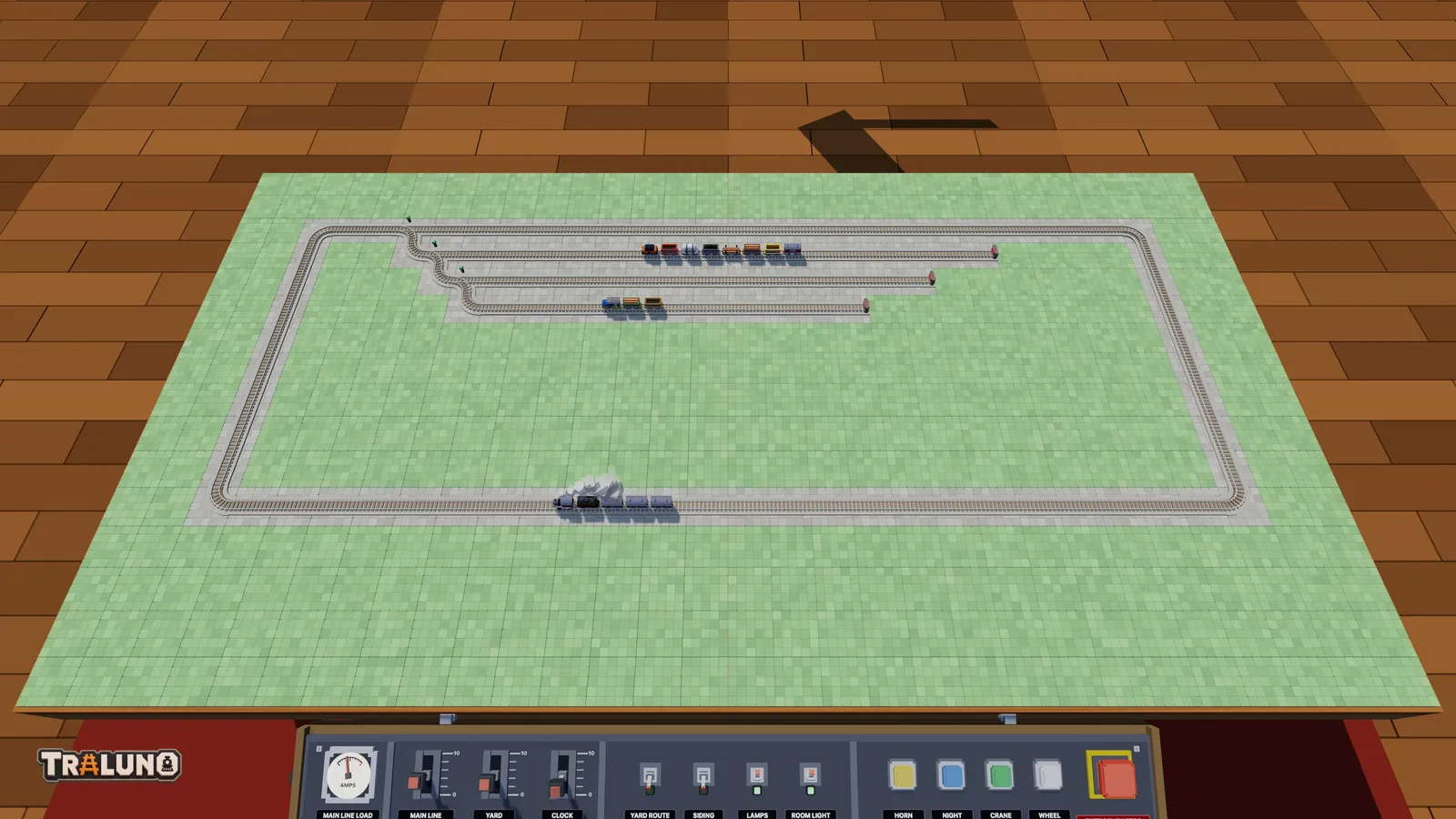
113 pieces: 100 straights, 7 curves, 3 switches and 3 buffer stops.
Three dead-end sidings fanned off the back straight, inside the oval. The fan is a ladder: the first switch takes a train off the main line, and each siding starts with the switch for the next one. The sidings are 15, 12 and 10 straights long, and every one of them holds the longest train.
Only trains running left to right along the back straight can turn in. The ladder faces that way, and a train going the other way runs through the first switch as if it were plain track. Set the first switch to Branch and choose a siding with the other two. The train runs in, stops at the buffer, reverses and comes back out through the ladder without any switch needing to be set, onto the main line heading the other way round the oval. So the yard is also a way to turn a train round.
A train does not park on its own. To leave one in a siding, hold it with Stop while it is in there.
The yard and the passing loop also fit on the same oval, the yard inside the back straight and the loop outside the front. Together they come to 129 pieces.
5. Out and back
..............................
..............................
................../---------\.
..................|.........|.
..................|.........|.
..................|.........|.
..................|.........|.
..................|.........|.
..................|.........|.
..................|.........|.
..................|.........|.
..................|.........|.
..................\----\....|.
..[--------------------*----/.
..............................
..............................
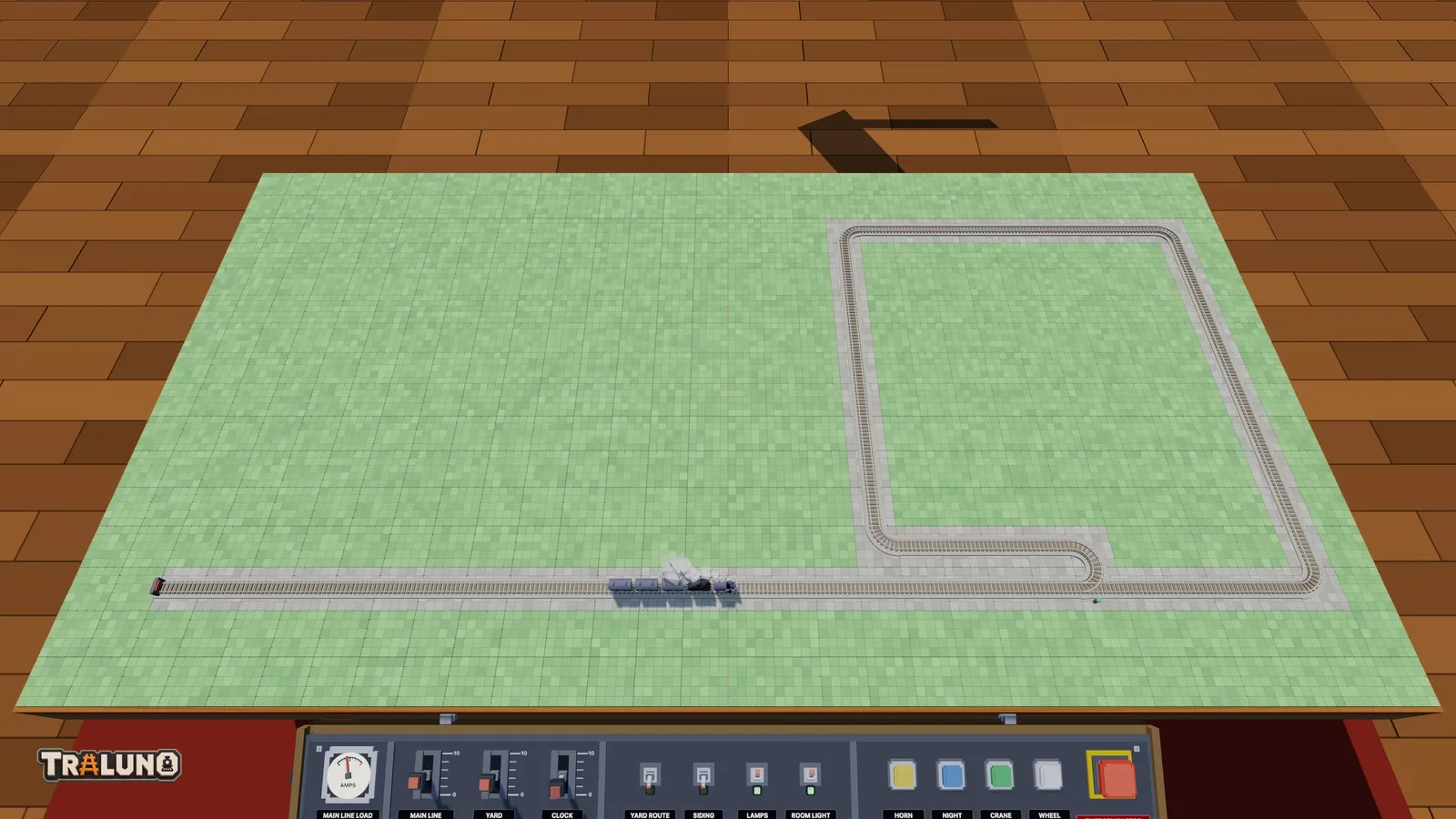
63 pieces: 56 straights, 5 curves, 1 switch and 1 buffer stop.
A single line along the front, from a terminus on the left to a reversing loop on the right. A train leaves the buffer stop, runs out, goes round the loop, comes back through the switch from the other side and returns to the buffer, where it reverses and sets off again. It runs like that indefinitely with nobody touching anything, and the one switch decides which way round the loop it goes.
Replace the loop with a second buffer stop and it becomes a point-to-point line: a shuttle between two termini, the simplest plan that still looks like a railway going somewhere. Either way the back left stays free, 18 cells by 13, enough for a town and an industry for the line to serve.
On a real two-rail layout, a reversing loop joins each rail to the opposite one, so it needs insulated gaps and some way of switching the polarity. That wiring has no counterpart in Traluno, which is why the loop is this easy here.
6. The dogbone
..............................
..............................
./-----\............../-----\.
.|.....|..............|.....|.
.|.....|..............|.....|.
.|.....|..............|.....|.
.|.....|..............|.....|.
.|.....\--------------/.....|.
.|...../--------------\.....|.
.|.....|..............|.....|.
.|.....|..............|.....|.
.|.....|..............|.....|.
.|.....|..............|.....|.
.\-----/..............\-----/.
..............................
..............................
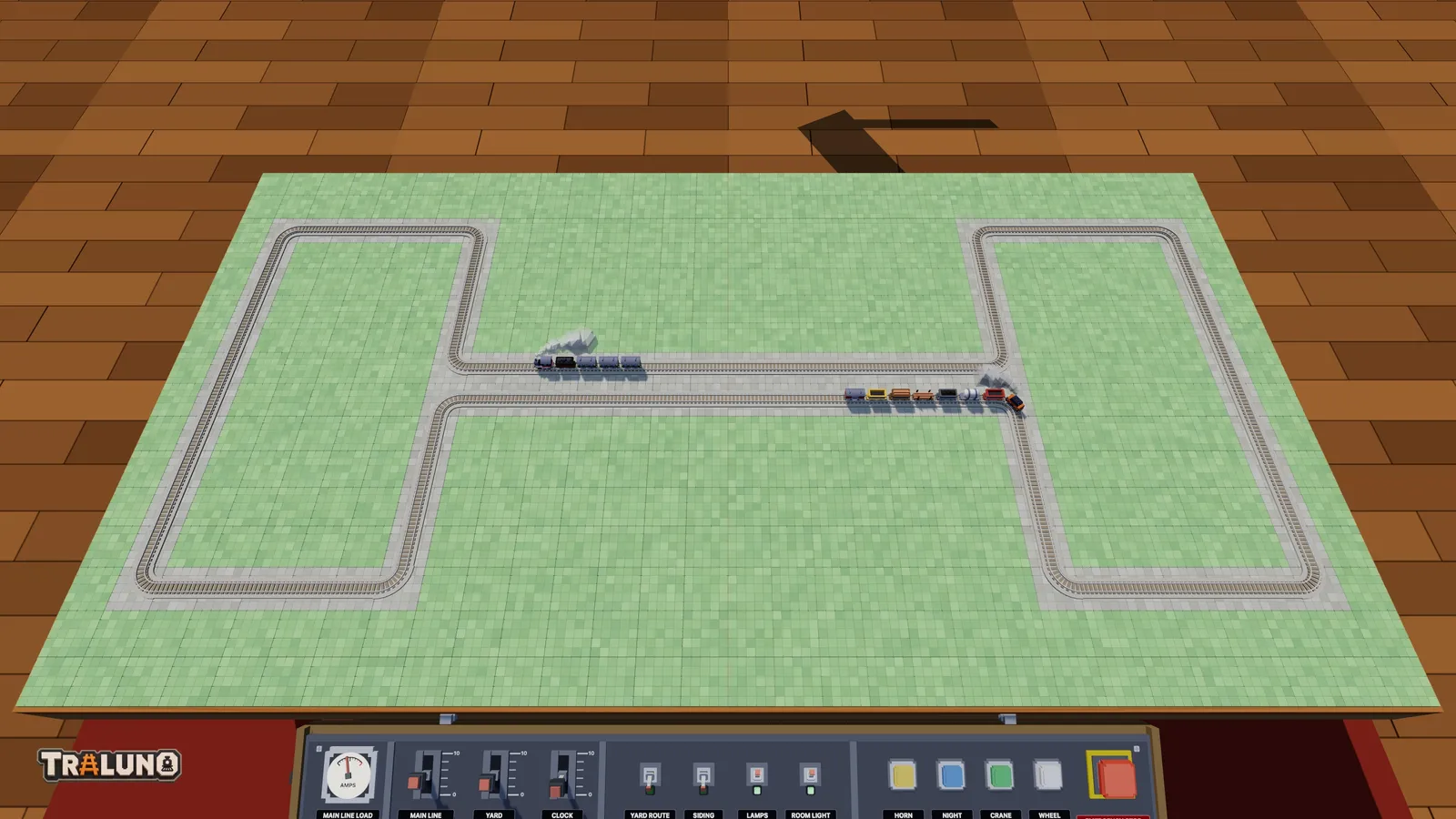
96 pieces: 84 straights and 12 curves.
In the hobby, a dogbone is an oval squeezed in the middle until its two sides run alongside each other, with a loop at each end. Here the middle is two tracks one cell apart for fourteen cells, and each end opens into a bulb seven cells wide.
Operationally it is still an oval: one track, one direction, no switches. What it buys is the look of a double-track main line through the middle of the table, a train coming back past you on the other track, and two bulbs that frame whatever scenery goes in them. It uses three times the curves of an oval, which is a fair measure of how much of it is for show. For two tracks that do something, the passing loop does more with fewer pieces.
Which of these model train track plans to build
To watch: the oval, the figure eight or the dogbone.
To run two trains: the passing loop.
To shunt: the yard.
To leave running: the out-and-back.
If one table is not enough for the combination you want, from one table to four covers what changes as the layout grows. Once the track is down, scenery ideas is the next step.
Turning them into HO scale track plans
Model railway track plans transfer as shapes, between scales and between a game and a baseboard. The geometry does not. A Traluno curve has a radius of 5 cm at the centreline, half a cell, and real HO curves are far wider; the scales post has the figures. A real turnout leaves at a shallow angle instead of turning a quarter circle inside one cell, and real track has gradients and wiring, which Traluno does not.
So treat these as tests of shape and operation. Before an HO train layout becomes a shopping list, the plan has to be redrawn with the curves and turnouts of the track you will actually buy, which is what planning a layout before you buy track is about. Until then, open the layout and lay one.
- track plans
- layouts
- track
- guide